


Subtotal $0.00

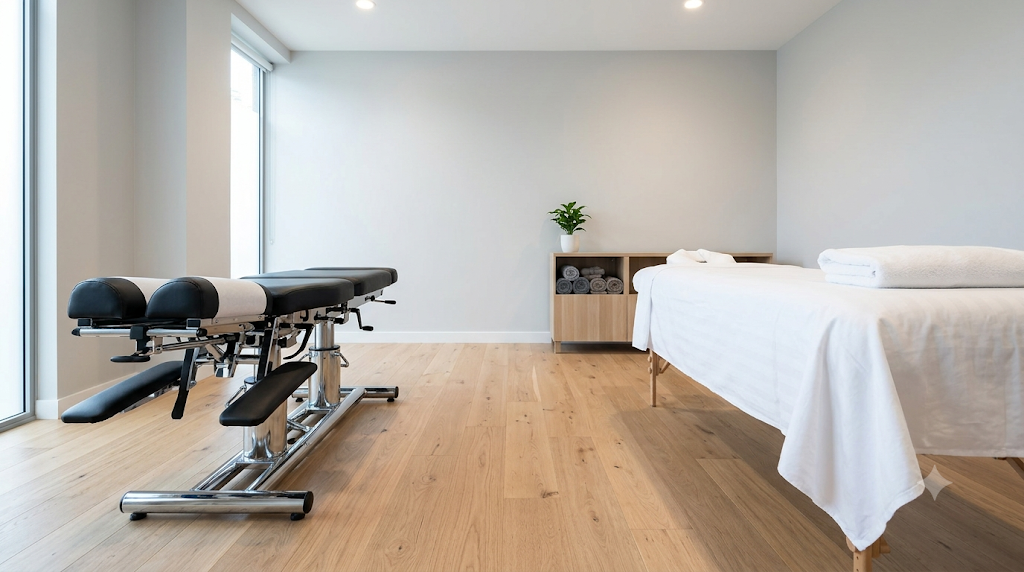
Chiropractic care and massage therapy work together because they treat two halves of the same problem. Adjustments restore motion to joints that have stopped moving properly. Massage releases the tight muscle and soft tissue that pulls those joints back out of position. Used alone, each one helps. Used together, the results hold longer, because the muscle work removes the tension that would otherwise undo the adjustment. Most plans at HealthQuest Longevity start with soft tissue work, follow with the adjustment, and add exercise to keep the change. The rest of this article covers what each therapy does, why combining them works better, the right order, how often to go, and which conditions benefit most.
What Each Therapy Does
The two treatments target different tissue and produce different patterns of relief.
| Chiropractic care | Massage therapy | |
| Main target | Joints, spinal motion, nerve irritation | Muscle, fascia, circulation |
| Typical methods | Specific adjustments, joint mobilization, rehabilitation exercise | Deep tissue, Swedish, and therapeutic massage |
| Best suited to | Restricted movement, sciatica, joint pain, neck-related headaches | Muscle tightness, spasm, stress-related tension, recovery |
| Relief pattern | Movement often changes quickly, then holds with exercise | Relief is usually short-term, so frequency and session length matter |
| Session length | Often 15 to 30 minutes | Often 30 to 60 minutes |
| Evidence highlight | Listed as a first option for new low back pain by the American College of Physicians in its 2017 guideline | A review of 25 studies with 3,096 participants found short-term pain improvement in new and long-term low back pain, per the National Center for Complementary and Integrative Health |
Why Combining Them Works Better Than Either Alone
Three reasons, all mechanical.
Tight muscle undoes adjustments. When muscle around a joint stays in a protective, shortened state, it pulls the joint back toward the position that caused the pain. Releasing that tissue first gives the adjustment a better chance of holding.
Stiff joints keep muscles tight. The reverse is also true. Massage alone can relieve a tight muscle for a few days, but if the joint underneath still is not moving, the muscle tightens again. Treating both breaks that loop.
The research favors combined care. A 2018 review from the Agency for Healthcare Research and Quality found that exercise, spinal manipulation, massage, psychological therapy, mindfulness-based stress reduction, yoga, acupuncture, and multidisciplinary rehabilitation each improved pain, function, or both for at least one month. Multi-part care performed better than single treatments used in isolation.
The largest trial on combined care makes the same point. A study of 750 active-duty service members published in JAMA Network Open in 2018 tested usual medical care against usual medical care plus chiropractic treatment that included spinal manipulation along with rehabilitation exercise, heat, cold, and other manual therapies. At six weeks, the group receiving the added hands-on care reported better pain intensity, less disability, higher satisfaction, and lower use of pain medication. No serious adverse events occurred.
Which Order Should Come First, Massage or the Adjustment
Soft tissue work usually comes first. Here is the sequence most Libertyville patients follow in a combined plan.
- Assessment. Movement testing to find which joint is restricted and which muscles are compensating.
- Soft tissue work. Massage, Active Release Technique, cupping, or trigger point work to release the guarding muscle.
- Adjustment. The restricted joint is treated while the surrounding muscle is relaxed, which usually means less force is needed.
- Exercise. Two or three movements to lock in the new range of motion.
- Longer massage between visits. Full sessions on separate days to keep tension down while strength rebuilds.
There is one common exception. If a muscle is in acute spasm and too sensitive to work on directly, the adjustment may come first to reduce the joint irritation driving the spasm. Your clinician makes that call from the exam.
How Often Should You Get Both
Frequency depends on how long the problem has been there. This is a general pattern, not a fixed rule.
| Stage | Chiropractic visits | Massage sessions | Purpose |
| Weeks 1 to 2, acute pain | 2 per week | 1 per week | Calm the pain, restore basic movement |
| Weeks 3 to 6, improving | 1 per week | Every 1 to 2 weeks | Hold the change, begin strength work |
| Weeks 6 to 12, rebuilding | Every 2 to 3 weeks | Every 2 to 4 weeks | Strength, posture, prevent repeat episodes |
| Maintenance | As needed | Monthly for desk or physical work | Keep tension and stiffness from rebuilding |
Session length matters for massage specifically. A review of four United States studies with 519 participants found massage relieved neck pain when sessions were long enough and frequent enough, according to the National Center for Complementary and Integrative Health. Short, occasional sessions produced weaker results.
Which Conditions Benefit Most From Combined Care
| Condition | Why the combination helps |
| Low back pain | Adjustments restore lumbar and hip joint motion while massage releases the surrounding muscle that keeps locking it up |
| Neck pain and desk-related strain | Upper back joints are usually stiff and the neck muscles are overworked, so both need attention |
| Sciatica and leg pain | Joint and disc irritation drives the nerve pain while gluteal and hip muscle tightness adds to it, addressed through the sciatica and back pain relief approach |
| Tension and neck-related headaches | Upper neck joints and the muscles at the base of the skull are usually both involved |
| Sports and overuse injuries | Soft tissue work restores tissue quality while joint work restores mechanics, supported by an athlete recovery plan |
| Stress-related tightness | Massage lowers muscle tension while adjustments address the stiffness that builds from holding one posture |
For migraine, evidence is more limited. A meta-analysis of six trials with 677 people published in Headache in 2019 found spinal manipulation reduced migraine days and pain intensity with a small effect, and the authors described the findings as preliminary.
Can You Get Chiropractic and Massage on the Same Day
Yes, and many patients do. Same-day treatment saves a trip and lets the massage prepare the tissue right before the adjustment.
Two things to know:
- Same-day appointments run longer, so book with that in mind
- On a first visit, the exam takes time, so a shorter massage may be scheduled with a longer session at the follow-up
Combining chiropractic care with massage therapy is one of the most common multi-therapy plans in the clinic, and a treatment plan is built around your findings rather than a fixed package.
Is Combined Care Safe
Yes, for most patients. According to the National Center for Complementary and Integrative Health, massage therapy carries few risks when performed by a trained practitioner. Side effects of spinal manipulation are usually mild and temporary, such as soreness, tiredness, or headache. In the 750-person trial published in JAMA Network Open, no serious adverse events were reported.
One risk should be stated plainly. Manipulation of the neck has been linked to tears in the arteries of the neck. Available evidence suggests this is rare, and patients should be informed of it. Tell your clinician about blood thinners, osteoporosis, past neck injury, or any recent trauma so technique can be modified or avoided.
Some symptoms need medical evaluation before hands-on care. Guidance published in American Family Physician lists back pain with fever, loss of bladder or bowel control, worsening leg weakness, unexplained weight loss, a history of cancer with new back pain, and severe pain after significant trauma as warning signs requiring prompt medical attention.
Final Thoughts
Chiropractic care fixes how joints move. Massage therapy fixes the muscle tension pulling on them. Treating one without the other is why so many people improve for a few days and then slide back. Combined care, usually soft tissue work first, then the adjustment, then exercise, produces the longer-lasting result, and the strongest trial on this approach showed better pain, less disability, and lower medication use at six weeks.
If you have been getting temporary relief from one or the other, book an appointment with a chiropractor in Libertyville and ask for a plan that uses both.

Comments are closed